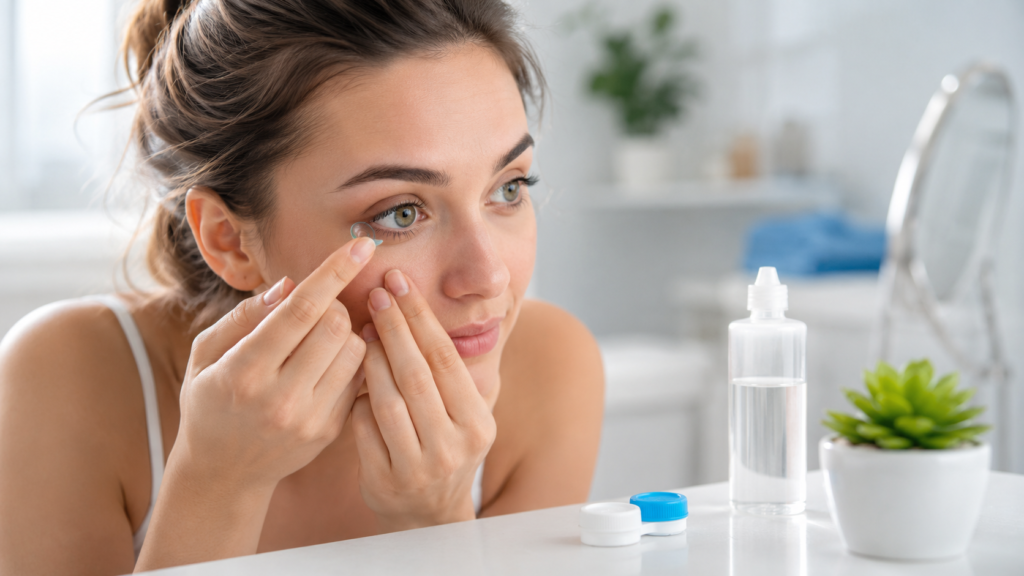
Cosmetic lenses can create a dramatic character look, subtly change natural eye colour or complete an outfit, but appearance should never come before eye health. People interested in cosplay contact lenses should consider comfort, visibility and correct fitting before selecting a design, particularly when lenses will be worn for extended events. Those seeking a natural change may prefer brown coloured contact lenses that complement their complexion without appearing overly artificial. Cooler shades such as grey coloured contact lenses can also create a noticeable effect, although the final appearance will depend on natural eye colour, lighting and the opacity of the lens.
Coloured lenses sit directly on the surface of the eye, which means they require the same level of care as clear prescription lenses. Even when lenses are worn only for cosmetic reasons, poor handling, incorrect sizing or unsuitable materials can lead to discomfort, irritation and avoidable eye problems.
Correct Fitting Matters
Contact lenses are not one-size-fits-all accessories. The shape and size of the eye can vary between individuals, and a lens that fits poorly may move excessively, feel tight or interfere with normal tear circulation.
A properly fitted lens should remain stable while still allowing enough movement for comfort. It should not consistently blur vision, create sharp pain or cause the eye to become increasingly red. Anyone experiencing these symptoms should remove the lenses rather than continuing to wear them in the hope that the discomfort will settle.
An eye examination can also identify existing dryness, allergies or surface conditions that may affect whether cosmetic lenses are suitable. This is particularly important for people who have never worn contacts before or who intend to use them regularly.
Clean Handling Reduces Risk
Hands should be washed thoroughly with soap and dried using a clean, lint-free towel before inserting or removing lenses. Oils, cosmetics, dust and bacteria can transfer easily from fingertips to the lens surface.
Lenses should never be rinsed or stored in tap water. Water can introduce microorganisms and may cause soft lenses to change shape. Only fresh contact lens solution intended for cleaning and storing lenses should be used.
The storage case also needs regular care. Old solution should be discarded after each use rather than topped up, and the case should be cleaned with fresh solution before being left open to air-dry. Replacing the case regularly helps prevent residue and microorganisms from building up inside it.
Sharing lenses is unsafe, even between family members or friends. A shared lens can transfer bacteria and other contaminants directly between eyes. Cosmetic lenses should always be treated as personal eye-care products.
Wearing Time Should Be Limited
Long events, conventions, parties and photography sessions can encourage people to leave decorative lenses in for many hours. However, extending wear beyond the recommended period may increase dryness and irritation.
People should follow the replacement schedule and wearing instructions provided with the product. Daily lenses are intended to be discarded after a single use, while reusable lenses require appropriate cleaning and storage between wears. A lens should never be worn beyond its stated replacement period simply because it still appears clean.
Sleeping in cosmetic lenses should also be avoided unless they have been specifically prescribed for overnight wear. Closed eyelids already reduce the amount of oxygen reaching the eye, and sleeping in an unsuitable lens can increase the risk of inflammation or infection.
Contact lenses should be removed immediately if they cause persistent discomfort, sensitivity to light, unusual discharge or reduced vision. These symptoms require prompt attention from an eye-care professional, particularly when they continue after the lens has been removed.
Makeup and Cosmetic Products
Makeup should generally be applied after contact lenses have been inserted and removed after the lenses have been taken out. This order reduces the likelihood of powder, mascara or eyeliner transferring onto the lens.
Cream-based products may create less loose dust than powders, although all eye makeup should be used carefully around the eyelid margin. Applying eyeliner directly to the inner rim of the eyelid can increase the chance of product entering the tear film and coating the lens.
Hairspray, setting spray and aerosol cosmetics should be used before inserting lenses where possible. When this is not practical, the eyes should remain firmly closed while the product is sprayed.
Any lens that becomes damaged, scratched or contaminated with makeup should be discarded. Attempting to continue wearing a compromised lens may irritate the eye.
Choosing Lenses for Comfort and Appearance
The most visually striking option is not always the most comfortable or practical. Highly opaque designs may create a stronger colour change, while more translucent styles may blend naturally with the iris. Buyers should review information about lens diameter, material, replacement schedule and intended wearing time rather than selecting a product based only on colour photographs.
Product images can also look different under studio lighting, camera flashes and digital editing. The appearance on the eye will vary according to natural iris colour, pupil size and surrounding light. Choosing a realistic expectation can help prevent disappointment and reduce the temptation to wear unsuitable lenses for a stronger effect.
Comfort should remain the main priority throughout the wearing period. Carrying a clean lens case and fresh solution allows lenses to be removed safely if irritation develops away from home. People should also bring prescription glasses when needed so they are not forced to keep uncomfortable lenses in to maintain clear vision.
Decorative lenses can be enjoyed safely when they are correctly fitted, handled hygienically and replaced on schedule. Careful use supports eye comfort while allowing wearers to explore different colours and creative styles without treating contact lenses as ordinary fashion accessories.


More Stories
Creating Camera-Ready Looks for Photos and Events
Interior Trends Making a Comeback
Biggest Home Reno Mistakes